
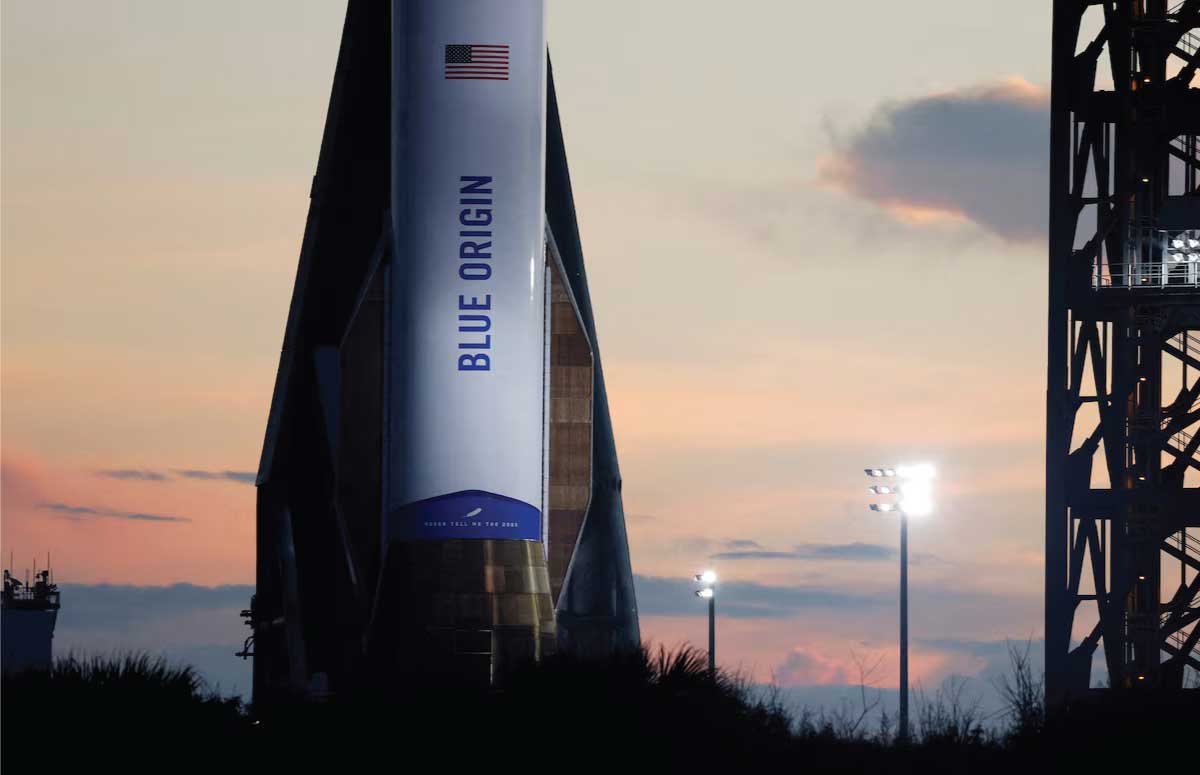
A "Half-Success" for Blue Origin: Reusability Achieved, Orbit Missed
The competitive landscape of the private space race intensified this weekend as Blue Origin achieved a historic technical milestone with its third New Glenn mission. For the first time, the Jeff Bezos-led company successfully launched and landed a reused first-stage booster, dubbed "Never Tell Me the Odds." This achievement signals a direct challenge to SpaceX’s long-standing monopoly on orbital reusability, proving that the 29-story heavy-lift rocket can reliably return to Earth for future flights.
However, the mission was only a partial victory. While the first-stage booster performed its vertical landing on the droneship Jacklyn, the rocket’s upper stage failed to deliver its primary payload—AST SpaceMobile’s BlueBird 7—to the correct altitude. The satellite, intended to provide direct-to-cellphone broadband, was deployed into an orbit too low to sustain operations and is expected to de-orbit. Despite the payload setback, the successful recovery of the flight-proven hardware marks a pivotal step in Blue Origin's goal to lower launch costs and secure its position as a primary contractor for NASA’s Artemis lunar missions.
Original Author: Akash Sriram / Chandni Shah
Organization: Reuters